Your favorite travel memories will sometimes be the unexpected delights, the little surprises, and the adrenaline-ooze of biting into something with a flavor your taste buds have never experienced before.
But, in order for that to happen, you have to be willing to try the nisperos. Even if you don’t know what they are. Even if you have no clue how to actually eat them. Even if the tour guide himself hasn’t tried them.
What are Nisperos?
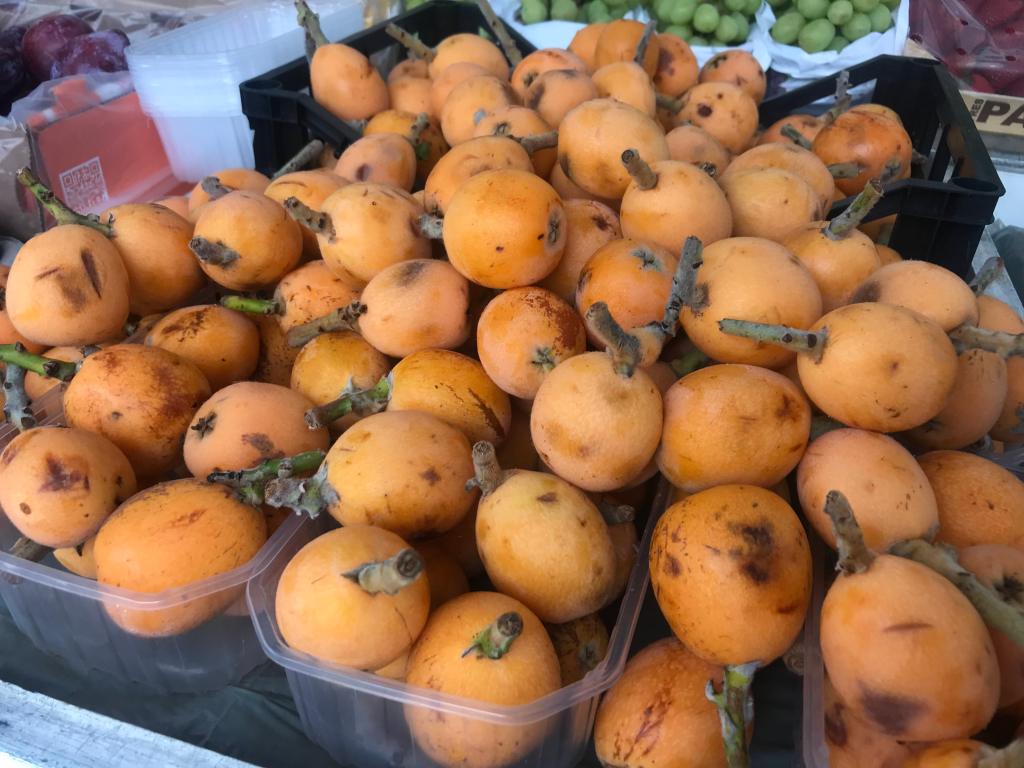
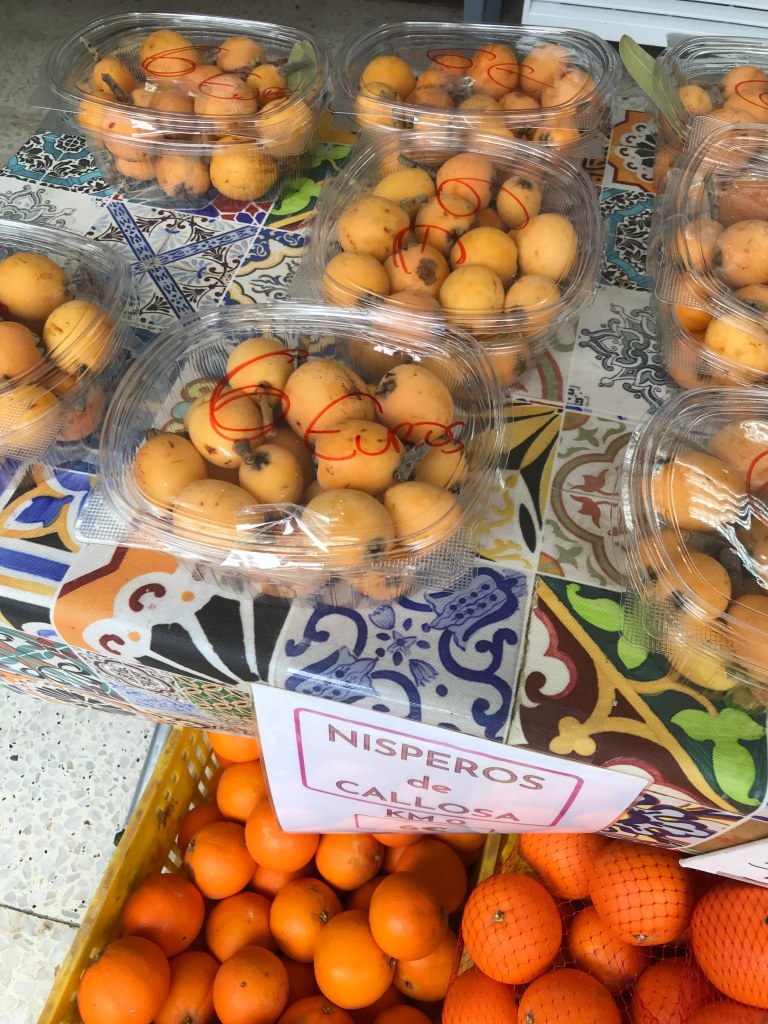
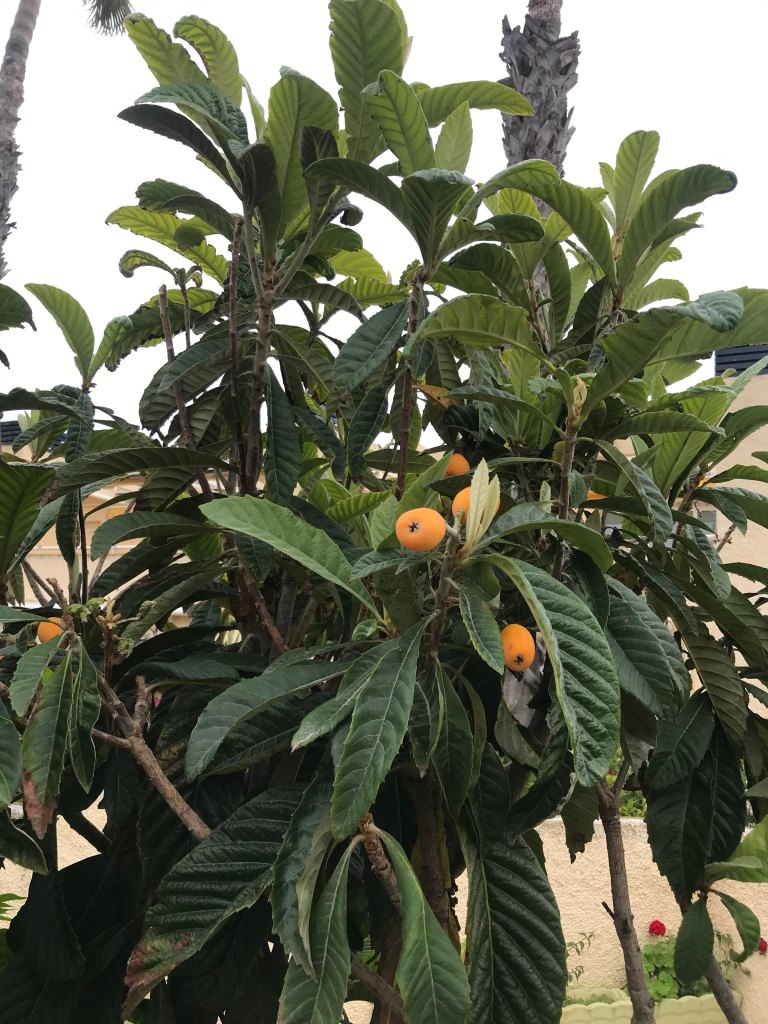
Nisperos, or loquats in English (yeah, I know, that translation probably didn’t help), are delightful, small, orange, spring fruits. The fruit originally comes from China, and they are also apparently very popular in Japan. In Spain, there are thousands of nispero trees growing in the Callosa d’en Sarrià region, near the town of Altea on Spain’s Costa Blanca.
That’s where I first saw them, on our way to Fonts de Algar, a beautiful waterfall with turquoise waters tucked into the mountainside of the Costa Blanca. The nispero trees cover the mountainsides of the windy road up to the waterfall, and many are covered with plastic, rectangular greenhouse protections.
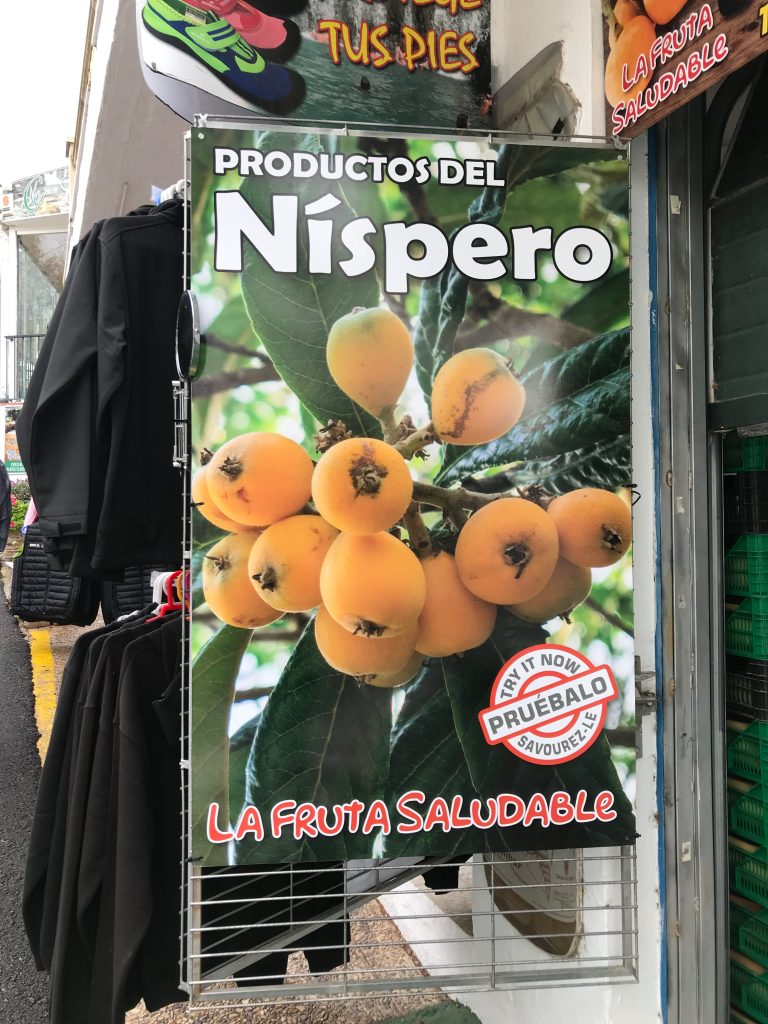
The nisperos are a huge part of the town’s economy, and if you wander into the stores in the area, you’ll find everything from nispero jam to nispero liquor and other delicious treats.
What do Nisperos Taste Like?
The day we went to Fonts de Algar, our tour guide told us all about the nispero trees and fruit and their effect on the region. Then someone asked him what they taste like. Believe it or not, our Spanish tour guide responded, “I don’t know, I’ve never tried them.”
After a response like that, it would be completely normal to think, “well, if he lives here and he hasn’t tried them they must not be anything special” and then carry on your merry way. That’s what most of the travelers on our tour did that day.
Not us. My sisters and I have always been curious (maybe a little too much) and adventurous (most certainly too much, according to our mom). So, walking past a little shop after enjoying the nature walk around the waterfall, we couldn’t help but stop and look at those tempting nisperos.
They’re peculiar little things. A little larger than a walnut, with vibrant orange tones and a few small almost-burgundy markings, and a stem, sometimes as long as the nispero itself.
“We’ll take four,” I tell the store lady. First, she gives us a pro-tip for choosing the nisperos: The ones that are more orangey are sweeter, the ones that are a lighter orange hue are going to be more sour.
Then, she kindly explains to us how to eat them: First, take off the stem at the top. Then, peel back the nispero skin until it’s all removed. Take a bite (And don’t eat the large brown seeds that are in the middle). And enjoy a delicious mix of tart and sweet.
Our New Favorite Fruit
Yes, we were immediately hooked. Nisperos are surprisingly delicious—we couldn’t help but buy more when we got back to Alicante (they sell them in stores, but for maximum flavor, the best place to buy them is in the weekly farmer’s markets).
We ate nisperos all week long. At one restaurant, we even had a delicious appetizer: fried cheese with nispero jam. Stunning. What a dreamy combination.

And, it turns out this fantastic little fruit has some serious nutritional benefits as well—they’re high in fiber and help with digestion, packed with carotenoids that help with immune function, and might even have anti-cancer effects.
After my sisters went back to the US, I kept buying and eating nisperos until June. And I couldn’t stop telling other people about my incredible discovery. It turns out a lot of other countries have nisperos as well. My friends from Peru told me that they have nisperos there, and in Colombia they also have a fruit with the same name that’s completely different.
Just like our mom used to say: “If you never try, you’ll never know.”
Standing on the side of the road and trying this delicious little fruit—then talking about it all week long as if we were nispero connoisseurs—will forever be an enjoyable and meaningful memory during our time in Spain’s Costa Blanca.
Our mom would always tell us (when we didn’t want to try something she made for dinner): “If you never try, you’ll never know.” And, mom was right.
Don’t be a close-minded, McDonald’s-only, stubborn international traveler. You’ll miss (dare I say?) all the good stuff.
Of course, you won’t like all the things you try (sorry, mondongo). And, yes, make sure you keep hygiene in mind—you wouldn’t be the first traveler to get wiped out by explosive diarrhea, or worse. But, more often than not, being a little daring and a little adventurous might just make your travels even more exciting, delicious, and rich than ever before.
And, if you’re ever in Spain near Alicante in the spring, try the nisperos, you’re going to love them.
 Emily Eats Everywhere
Leave a comment