📌TL;DR
✈️ Day 1: Arrive in Alicante, visit San Juan Beach and the Santa Barbara castle
🍸 Day 2: Visit the party-captial, Benidorm
🏰 Day 3: See Guadalest, the castle in the clouds
⛰️ Day 4: Explore the Algar waterfalls
🌊 Day 5: Kayak in the Mediterranean Ocean in Javea
🏖️ Day 6: Visit costal towns like Calpe and Altea
🤿 Day 7: Take a boat and snorkel near Tabarca Island
Best time to visit: April, May, September, October
Of the 80 million tourists that visit Spain each year, the vast majority never make it to the stunning Costa Blanca. With unique Mediterranean cuisine, breathtaking beach coves, and stunning views, Spain’s Costa Blanca is the perfect option for travelers who want to see a hidden side of the country and explore this beautiful coastal region.
What is Spain’s Costa Blanca?
Spain’s Costa Blanca is a beautiful 120-mile stretch of Mediterranean coastline from the city of Denia to Pilar de la Horadada—on the south-eastern side of Spain. It used to be one of the country’s best-kept secrets. While tourists flooded to cities like Barclona, Madrid, Sevilla, and Granada, coastal gems like Alicante, Altea, and Calpe were visited mostly by Spainiards and a few lucky wanderers. But, that’s not the case anymore.
The beautiful destinations along the coast are becoming more and more popular, especially during the summer.


When is the best time to visit Costa Blanca?
Well, to avoid the crowds, try going in late March, April, or early May (if you get lucky, you’ll still get good temperatures in the low 70s). Visiting in the fall months of September or October can also be a good option.
Or, brave the crowds of tourists from around the world and enjoy the Spanish sun during the hot summer months of June, July, and August (just be prepared for 90+ temps and 70% humidity).
You could easily spend a month (or more) enjoying the hundreds of little beach coves, or calas, sprinkled around cities like Alicante, Xabia, Calpe, Benidorm, Villajoyosa, and Altea.
But if you only have a week, check out this fantastic itinerary to see some of the most fantastic sights along Spain’s famed Costa Blanca.
What’s the best way to arrive in Spain to see the Costa Blanca?
Flying into the Alicante airport is the best option for international travelers. The Alicante airport is medium-sized and easy to navigate—and just 20 minutes from the center of Alicante. There’s even a 24-hour bus that takes you from the airport to the city center for just 4.50 euros (as of April 2025). You can also take a taxi for 25-30 euros.
Day 1: Explore Alicante’s San Juan Beach and the Santa Barbara Castle
During your first day on the Costa Blanca, dive in and explore all Alicante has to offer. From palm-tree lined streets and beautiful beaches to a famous bullring and the stunning Santa Barbara castle, Alicante is the perfect city to welcome you to Spain.

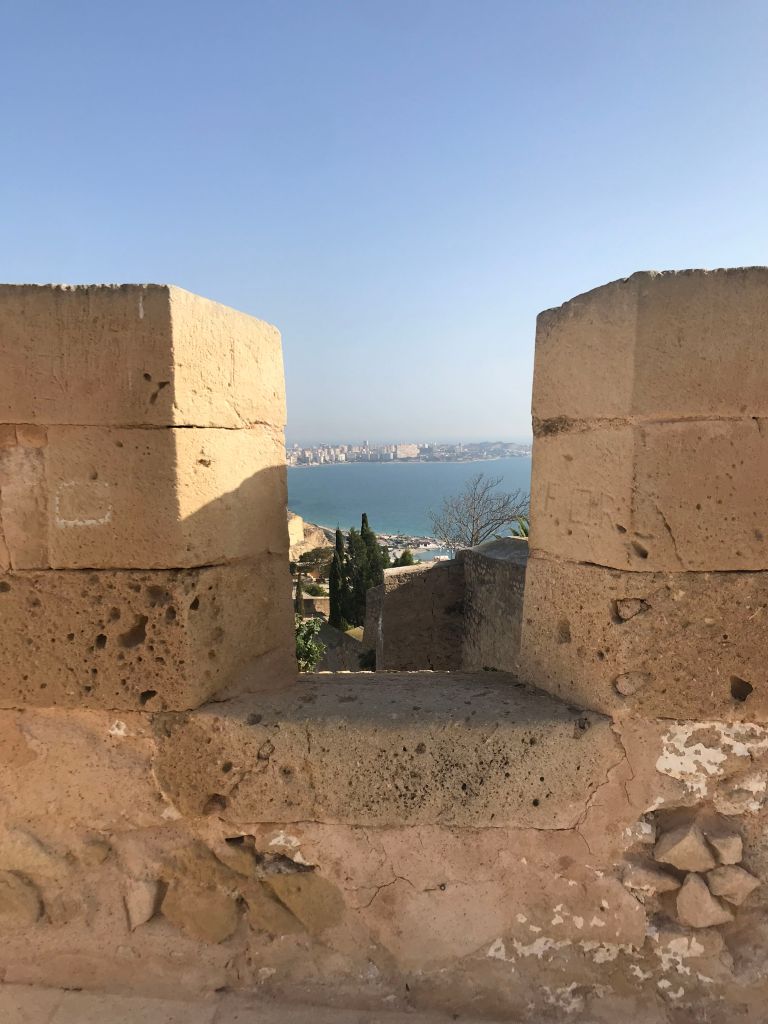

In the morning, walk to the top of the Santa Barbara castle for amazing views of the entire city and the mediterranean ocean. Head to San Juan Beach for a beachfront paella lunch at Azul Restaurante.
Then, spend the afternoon exploring the city center—you don’t want to miss the famous Mushroom street or the Plaza de Toros. And, get your camera ready to take a picture walking down La Explanada—the cool, curvy tile mosaic design and palm-tree lined walkway is the perfect photo spot.
Finish off the day with tapas, ice cream at Livanti Gelato, or simply enjoying the sunset at the popular Postiguet beach.
Day 2: Party in Benidorm
If you’re a party animal, you’re going to love Benidorm. Benidorm is one of the most popular cities in Spain’s Costa Blanca. Every summer, millions of British tourists enjoy the stunning beaches and wild nightlife in this party capital.

Benidorm is just a quick 30 minute trip by taxi or bus from Alicante. If you’re a budget traveler, or you’d like to take a more scenic route, you can also go by Tram. It’s a two-hour ride with views of the little towns that dot the coast. A two way ticket will cost you less than 5 euros (as of April 2025).
Make sure to enjoy the view of the coast and take pictures at Balcón del Mediterráneo, sunbathe and enjoy the water at the always popular Levante and Poniente beaches, and visit the touristy shops that line the beach.
Day 3: Visit Guadalest, the Castle in the Clouds
One of our favorite day trips was to Guadalest—a tiny little town in the mountains with a beautiful castle and breathtaking views. You can find day trip tours for about 50 euros per person that take you to Guadalest, Algar Waterfalls, and Altea in one day. Or, you can visit on your own by bus, taxi, or rental car (it’s just 30 minutes from Benidorm or 1 hour from Alicante).

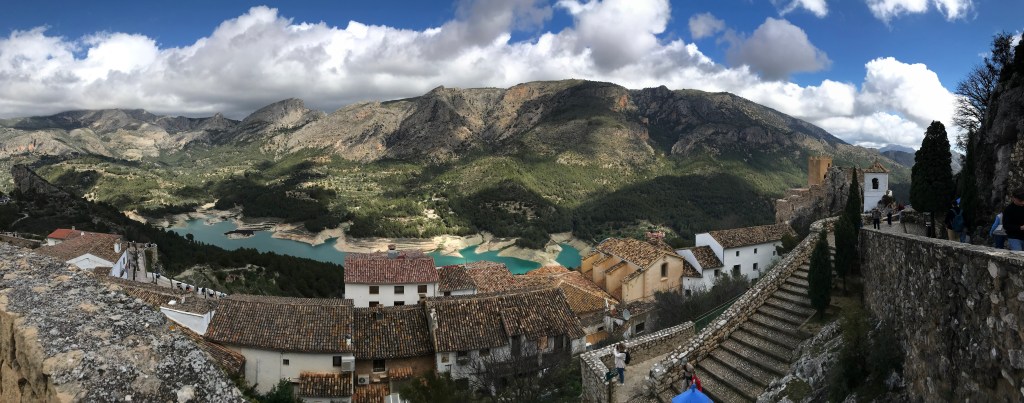
Guadalest is a must-see. A picturesque castle atop a rocky mountain that oversees a beautiful turquoise lake—with gray peaks decorating the backdrop. Incredible.
After you walk through the little town’s narrow streets and explore a few shops, head to the Museo Municipal “Casa Orduña,” which is right to the left of the church. You’ll pay 4 – 6 euros per person to enter the museum and see the inside rooms of the castle. But the best part is that you’ll get access to the best views from the highest part of the castle.
Take your pick from dozens of beautiful viewpoints—they’re all spectacular. You can even bring some snacks and have a picnic at the top while enjoying the views. Or, have lunch at one of the restaurants in the little town. We chose Restaurant L’Hort, which had great views of the palm-tree lined entrance to the castle (and, the fried cheese with nispero jam appetizer was divine).
Day 4: Explore the Algar Waterfalls
The Algar Waterfalls are situated in a beautiful little nook in the mountains. It’s about an hour by car from Alicante, and about 30 minutes from Benidorm.

On your way there, if you go during springtime, you’ll see mountains lined with nispero trees. Nispero is a unique and delicious little orange fruit native to the region (you can find the fruits in the little stores you’ll pass while walking up to the entrance, along with nispero jam, nispero-flavored liquor, and other nispero treats). You’ll definitely want to try the nisperos.

The entrance price to the waterfalls is 4-5 euros, depending on the month you visit, and it’s recommended you use water shoes if you plan on swimming. There’s a beautiful little nature walk you can do that takes you to the different waterfalls and if you come in the summer, you can even enjoy swimming in the crystal-clear water for a few hours.
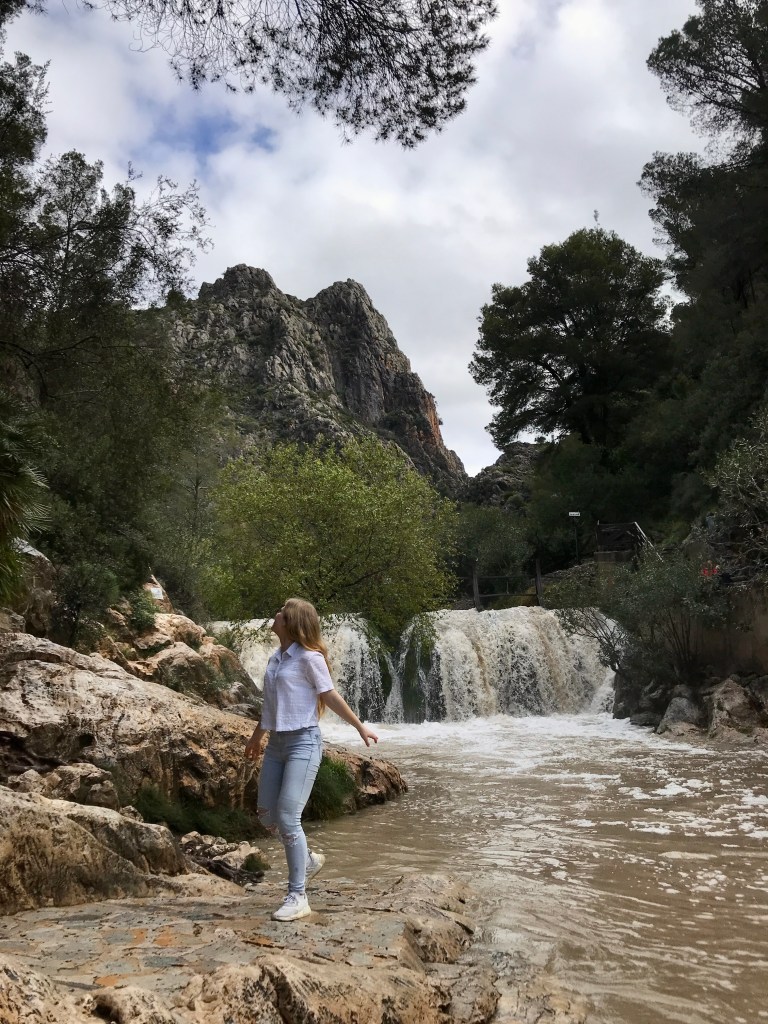
We visited the Algar Waterfalls a few days after a very rainy week. So, when we got there, the water was brown, not the stunningly-clear turquoise color that you see in all the pictures online. The pools were so full that it was overflowing onto the stairs and we had to climb around to get to the upper waterfall. We still had a great time and enjoyed the beautiful surroundings (and the nisperos), but you might want to think twice if you’re planning on visiting when it’s been raining.
Day 5: Kayak into One of Spain’s Biggest Coastal Caves in Javea
Hands down, the most fun we had during our week on the Costa Blanca was during the kayak tour with Siesta Advisor. Ten out of ten, would recommend. Their kayak guides are experts (ours was the second most qualified kayak tour guide in all of Europe) and just really friendly and kind people.


We rented a car and drove from Alicante to Javea, an incredible coastal town with super windy roads that take you past beautiful Spanish houses down to stunning, rocky little beach coves.
First, we stopped in Cala Granadella, early in the morning when no one had arrived. This beautiful beach is full of little white rocks. Parking can be tricky so come early. There’s also an adorable burgers and breakfast place, La Bandideta, right on the beach.
Then, we headed to Cala Portixol, another beautiful little beach cove. We had breakfast at Cala Clemence, a cute little restaurant that overlooks the mediterranean and has amazing views, before starting our tour.
Siesta Advisor upgraded us to their premium tour, the Cova dels Orguens Kayak Tour. We kayaked (through the unforecasted rain) to one of Spain’s largest sea caves. We swam around and explored the cave, and even kayaked through a narrow little tunnel to a darker, hidden part of the cave as well. Our tour guide told us that this was where they filmed one of the scenes from the movie, Uncharted with Tom Holland.
On the way back the sun came out and we took pictures looking up at Cap Negre, a stunning rock formation on Javea’s coastline. We stopped to cliff jump as well and had a great time paddling through the beautiful ocean (luckily, no one flipped their kayak either).
Day 6: Enjoy a Coastal Drive—with stops in beautiful Spanish towns
During your trip you can’t miss these two coastal gems—Calpe and Altea. If you have more time, you could easily spend a day or two exploring these two towns and their beautiful beaches.
Calpe is known for it’s beaches and the absolutely stunning Peñón de Ifach, a huge limestone rock that juts out into the mediterranean sea. You can even hike the rock, but you’ll need to reserve your spot online before, since there’s a limit to how many people can hike each day.
Even if you don’t plan to hike the rock, make sure to visit Calpe’s unforgettable beaches and take your picture with the Peñón de Ifach in the background. You won’t regret it.

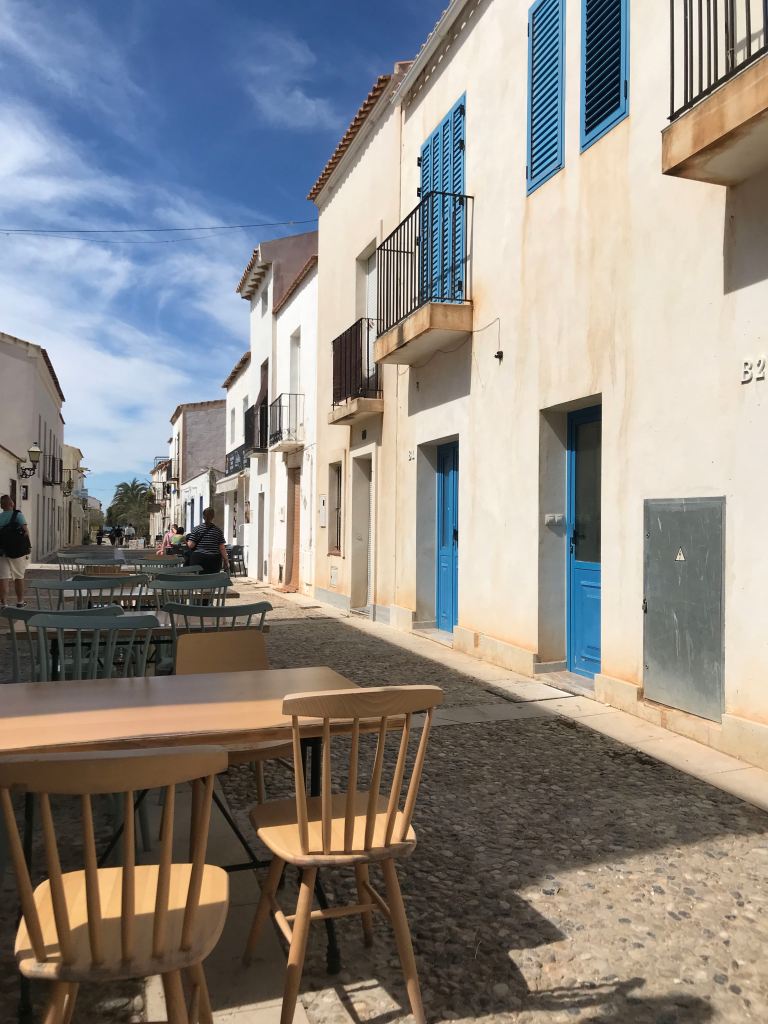
Right next door, you’ll find the beautiful town of Altea. Nicknamed the Greece of Spain for it’s white buildings and flower-filled streets, Altea is a must-see during your week on the Costa Blanca.
The most famous sight in Altea is the iconic Nuestra Señora del Consuelo church. The ceramic blue titles that cover the church’s two domes make it stand out among the white square buildings that fill the streets.
Have lunch at one of the many restaurants that surround the plaza, or walk around the narrow streets and peek into the many souvenir and art shops. You’ll find views of the ocean from various spots in the city, and from the iconic church you can walk down to the beach in less than 15 minutes (but if you’re looking for a fantastic afternoon at the beach, Calpe is your best bet).
Day 7: Take a Boat to Tabarca Island
To finish off your trip, take a boat to Tabarca Island—either from Alicante or Santa Pola (a nearby city on the other side of the airport). The boat ride costs around 9-15 euros per person, depending on the time of year and what company you choose to go with (really, they’re all the same, so look for the cheapest one).
It’s about a 30 minute trip to Tabarca Island, and you can stay for just a few hours, an entire day, or if you have more time—even stay the night on the island and come back the next day.
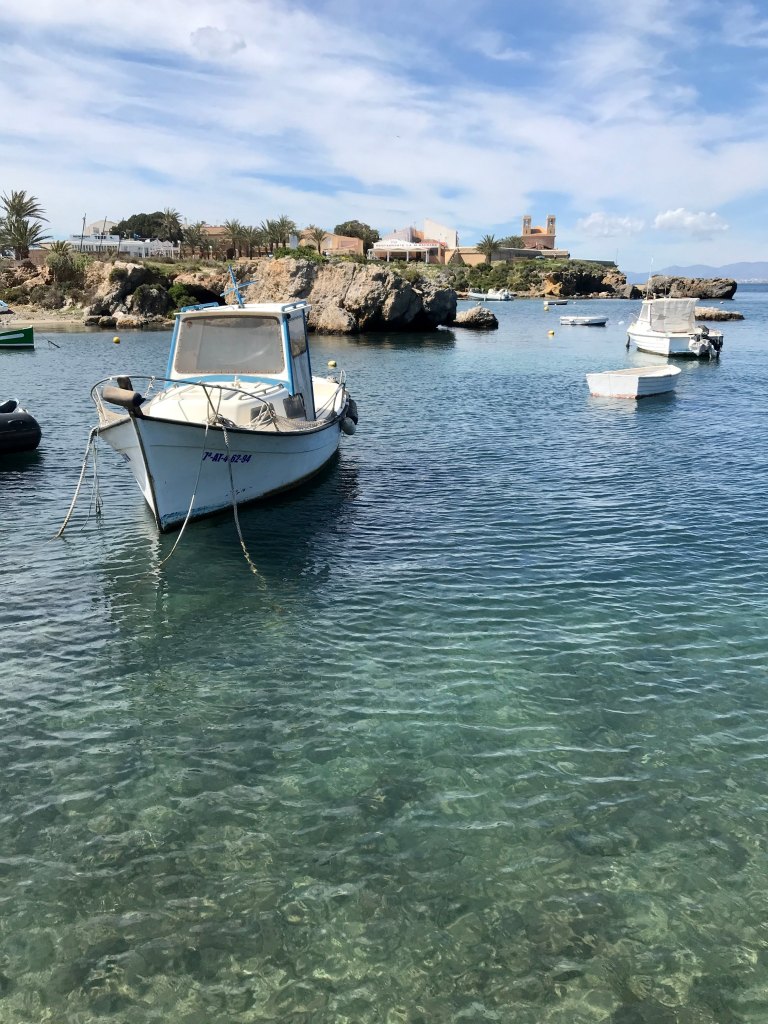
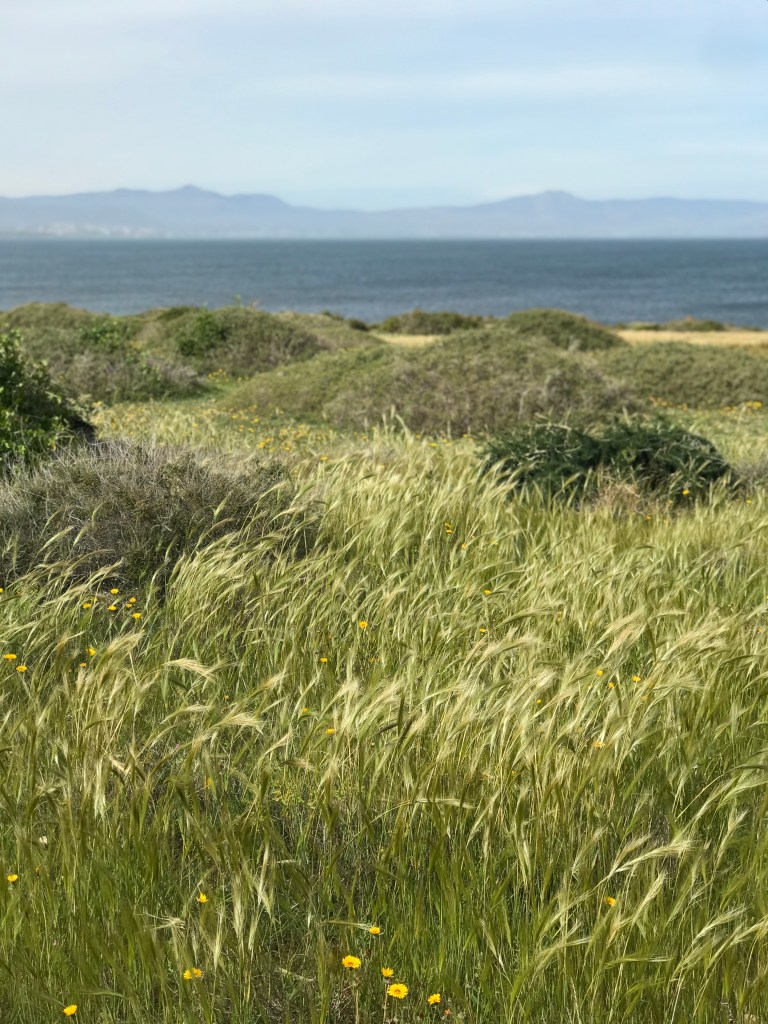

Tabarca Island was once a pirate refuge, but today it’s better known for its snorkeling. Its clear waters are home to a wide variety of sea life—from octopuses to starfish and all sorts of fish.
There’s a more natural side of the island with flowy island grass and a small lighthouse and on the other side, a walled city with a few houses and restaurants (try Restaurante Casa Gloria when you go). You can walk around the entire island in less than an hour.
The day we went in March, it was super windy and wavy so we didn’t get to snorkel. One of the restaurant owners told us during the spring it can be windy, but during June, July, and August, the water is super calm and perfect for snorkeling.
Sure enough, when we went back in August, the water was amazingly clear and there were so many fish. I even saw a fried-egg jellyfish! For snorkeling, there are a ton of spots around the island to choose from.
Costa Blanca will not disappoint.
Castles, sea caves, pirate islands, kayaking, and fantastic food—what more could you ask for?
This is a great itinerary for an unforgettable week on the Costa Blanca. We absolutely loved our week exploring this unique side of Spain and can’t wait to come back and explore even more.
Next time we come back, we’ll have to discover the Costa del Sol, or the Costa Brava, or the Costa Verde—Spain’s got a lot of costas to enjoy.
 Emily Eats Everywhere
Leave a comment